
In a groundbreaking effort to combat hunger and improve education, the School Meal Planner (SMP) PLUS is transforming the way schools feed their students. Developed by the World Food Programme (WFP), this innovative tool is gaining global momentum, with millions of children benefiting from nutritious meals that foster better learning, attendance and development.

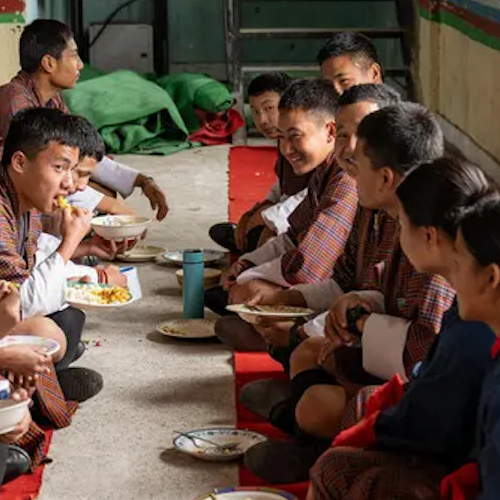
Pupils of Buli Central School enjoying a school meal provided through the Ministry of Education and Skills Development’s National School Feeding and Nutrition Programme. Throughout 2024, WFP supports the ministry with the design of nutritious meals through School Menu Planner (SMP) PLUS tool. © WFP/Rein Skullerud
The Growth Journey
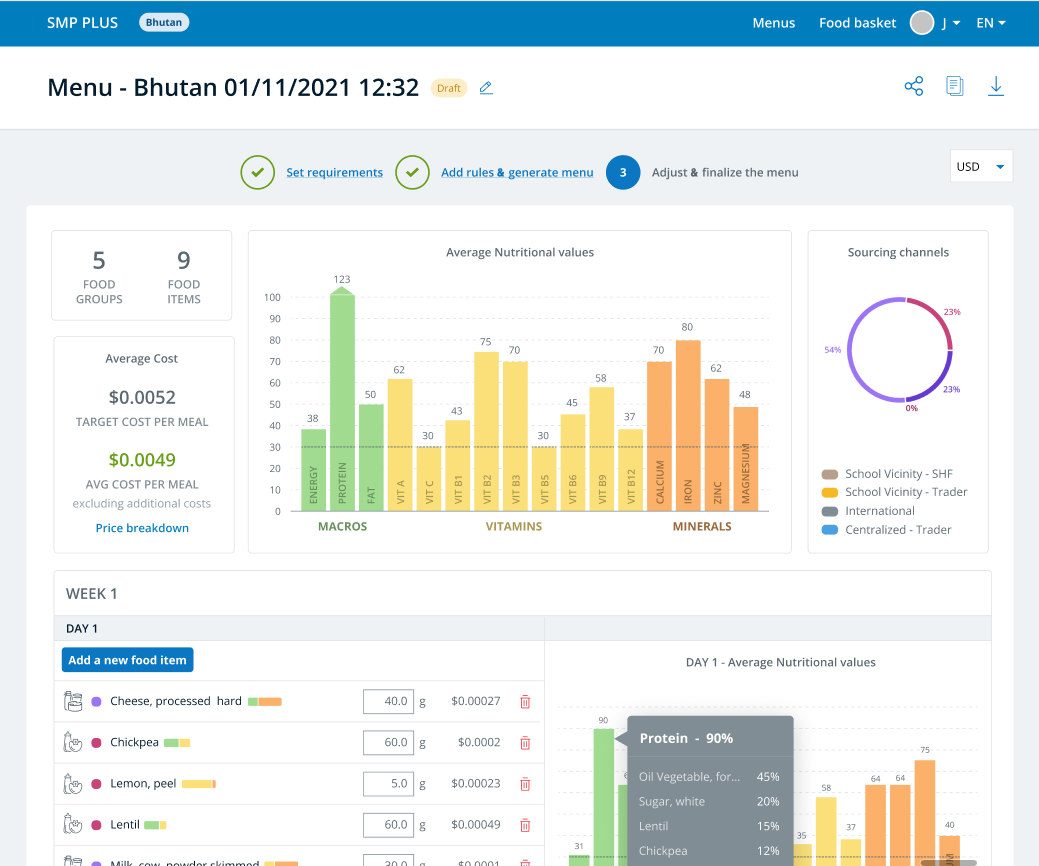
Originally designed to streamline meal planning and food procurement, SMP PLUS has evolved into a comprehensive digital solution addressing the complex challenges of national school feeding programmes. By leveraging optimization technology and advanced data analysis, the platform helps governments and schools design nutritious, cost-effective and locally sourced menus.
The initiative received critical support from the WFP Innovation Accelerator, which enabled the tool to move from early pilots to global scale. Through structured acceleration phases — including bootcamps, sprint funding and scale-up support — SMP PLUS expanded its reach and refined its governance, technology and implementation model.
Today, SMP PLUS supports school meal design in 17 countries, with plans to deepen engagement across 66 countries where the tool has already been introduced.
Key Facts
-
SMP PLUS uses optimization algorithms to balance nutrition requirements, cost constraints and local food availability.
-
In pilot countries, the tool achieved up to 20% cost reductions while increasing local procurement by as much as 70%.
-
In Lesotho, the programme contributed to a 65% increase in school feeding budgets between 2023 and 2024.
-
The platform integrates digital training materials and dashboards to support government ownership and operational efficiency.
Impact Beyond the Classroom
The impact of SMP PLUS extends far beyond improved menus. By promoting home-grown school feeding models, the initiative strengthens local agricultural systems and supports smallholder farmers. Local sourcing not only boosts rural economies but also improves dietary diversity for children.
Research such as the State of School Feeding Worldwide 2022 confirms that daily school meals improve attendance, retention and academic performance — especially for girls, who are disproportionately at risk of dropping out due to economic pressures.
By aligning nutrition, education and local economic development, SMP PLUS represents a systems-level innovation in social protection.
Outlook
As WFP’s School Meals and Social Protection Service deepens collaboration with governments, SMP PLUS is expected to integrate new features and expand implementation support in 2025 and beyond. With continued backing from the WFP Innovation Accelerator, the initiative is positioned to scale further — helping countries build sustainable, resilient and nutrition-smart school feeding systems.
Original source: WFP Innovation
Photos credits: RDNE Stock Project via Pexels and © WFP/Rein Skullerud